Consumer Behavior and Attitudes in Purchasing Vegetables
Journal of Agriculture Research- Juniper Publishers

Abstract
Vegetables are consumed by many on a daily basis to
fulfill their nutrient requirements. Consumers spend a considerable
amount of their income on vegetables. However, the patterns and
decisions in purchasing and attitudes may vary from one person to
another. Understanding this behavior is important in decision making
along the supply chain and in development of policies. 100 randomly
selected vegetables consumers from Kandy district of Central Province in
Sri Lanka participated in a study carried out to determine the behavior
during purchasing of vegetables. The results of this study concluded
that the behavior of consumers is affected by the price, health factors,
the quality of vegetables, home gardening and the situation. Consumers
prefer to purchase a variety of vegetables including the organically
produced.
Keywords: Consumer behavior; Patterns in purchasing; Vegetables
Introduction
Consumption of vegetables is a cheap mean of
fulfilling nutrient requirements. However, its significance in diet is
determined by the culture. In Sri Lankan agriculture, vegetables are a
sub sector that is considered to be important by both the farmers and
consumers. A majority of Sri Lankans consume vegetables on a daily basis
along with the country’s staple food rice. According to Household
Income and Expenditure Survey 2016, 8% of total household expenditure on
food and drink in Sri Lanka is spent on vegetables. Hence, vegetables
are one of the frequently purchased food items in the country.
Consumers behave differently during purchasing of
vegetables. Factors affecting the behavior of consumers are both
endogenous and exogenous. Endogenous or internal factors include the
needs and motives, learning, self-concept, personalities and attitudes
whereas culture, reference group, family and socio-economic situation
are considered to be exogenous or external factors [1,2]. The decision
in buying fruits and vegetables are based on analysis of cognitive and
emotional elements with a little effect from advertising or other
campaigns [3,4] and they value freshness, appearance and price more than
other characteristics [3,5]. The choice of the market place and
vegetables, frequency of shopping, amount spend on vegetables and
factors considered during purchasing vary from one consumer to another.
The store choices of consumers in purchasing vegetables in Sri Lanka
ranges from modern supermarkets to traditional fair system known as
Pola. The new retail format of supermarkets and hypermarkets tend to
develop their range of fresh fruits and vegetables to meet a growing
demand [6,7]. Modern retailers also provide the other benefits such as
availability of all products under one roof and convenience. However,
consumers also purchase vegetables at unorganized retailers and
traditional fairs owing to various other factors. Even though a majority
of households consume vegetables daily, the frequency of purchasing
vegetables vary depending on several factors. Some buy them for 2-3 days
given that they have the luxury of a refrigerator [1]. The variability
in climate associated with the topography of Sri Lanka allows the
cultivation of different types of vegetables increasing the choices
available to the consumers.
The modern consumer has a concern regarding the
safety and quality of the food products [8]. The niche products
including organic and locally grown food are becoming more popular [9].
Consumers either seek to purchase environmentally friendly food products
or become health conscious about what they eat increasing the demand
for organic food in the market [1]. However according to Rosairo [10],
in Sri Lanka, a majority of buyers are unable to consume organic
vegetables due to a range of specific reasons.
Understanding the behavior of consumers and attitudes
during purchasing of vegetables can have many positive impacts. It is
useful for the vegetable supply chain actors to know and understand the
shifts in patterns in demand and
underlying determinants of the changes while providing better
information for the formulation of agricultural policies that foster
development of market demand through local food producers and
traders [6]. At present, consumers recognize their influence over
products and stores. Thus, understanding consumer needs and
preferences would help the retailers and suppliers to anticipate
the changes that may happen in the future [11]. The study was
carried with the objective of assessing the behavior of consumers
and their attitudes in relation to the purchasing of vegetables.
The major factors influencing the purchasing of vegetables,
selection of outlets, constraints faced, attitudes towards organic
and environmental friendly vegetables, post purchase losses and
cultivation of vegetables in the home garden were explored during
the study.
Methodology
Data were collected through a self-administered or
interviewer administered questionnaire. 100 consumers were
selected randomly from the district of Kandy, Central Province,
Sri Lanka. The participants were above the age of 18 years and
were either primarily of jointly responsible for grocery shopping
in their household. The questionnaire gathered data regarding
demography, vegetable purchasing frequency, locations and
amount spent, types purchased, factors influencing, and problems
faced, behavior during purchasing of vegetables, attitudes and
experience in purchasing organic vegetables and home gardening.
Descriptive statistical analysis to calculate frequencies was carried
out using IBM SPSS software version 24. Data were graphically
illustrated using MS EXCEL (2013).
Results and Discussion
Demographic status
The variations in demographic factors can influence on the
behavior and attitudes of a consumer.
Distribution of age: Table 1 The majority of the respondents
were from the age group of 31-45 years with a percentage of 43%.
The age group of 45-60 years followed the majority. Only 6% were
above the age of 60 years.

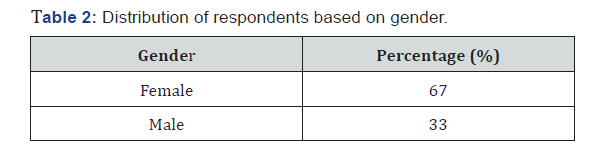
Gender as a factor: When the gender of respondents who
are responsible for grocery shopping in the households was
considered as a factor, 67% were females and 33% were male
(Table 2).
Level of formal education: (Table 3) Only a minority of 5%
had received a lower level of formal education. 44% had passed
the Advanced Level examination and 39% were degree holders.

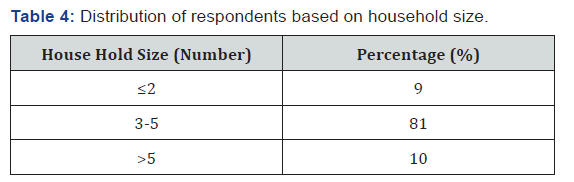
Household size: The majority of respondents had a family
with 3-5 members. 2 or less numbers were present in 9% of
families while 10% had more than 5 members (Table 4).
Expenditure on vegetables
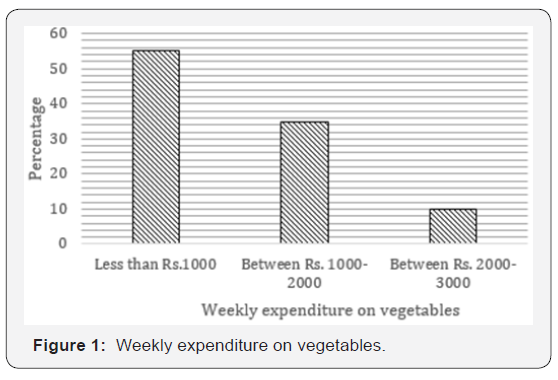
The weekly expenditure on vegetables by each respondent
varied as follows (Figure 1). 55% of respondents spent less than
Rs.1000 per week for vegetables while the expenditure of 10%
was at the highest range of Rs.2000-3000. Choice of vegetables,
household size, income and location of purchase are a few factors
that can influence this variation among the respondents.
Location of purchase
The store choice depends on socioeconomic background of
consumers, their personality, and past purchase experience [12-
14]. Sinha et al. [15] and Balaji [12] state that demographics and individual values also can affect this choice (Table 5)

Most of the respondents visited more than one location to
purchase vegetables. Green grocers were visited by 76% which
was the common location. 31% selected organized supermarkets,
44% used small retail shops and 32% purchased vegetables from
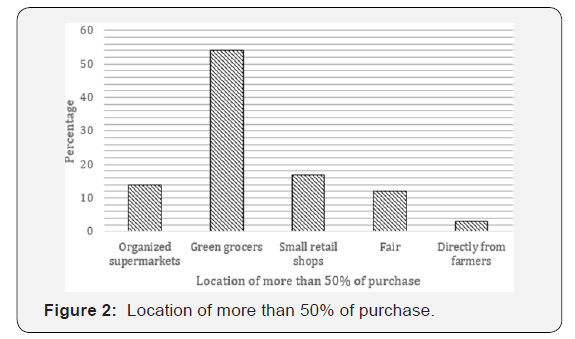
fair. Green grocer was selected by a majority 54% of respondents as
the location where more than 50% of vegetables were purchased.
This was followed by small retail shops with a value of 17%. The
least choice was the direct purchasing from farmers (Figure 2).
Factors considered in determining the location of purchase
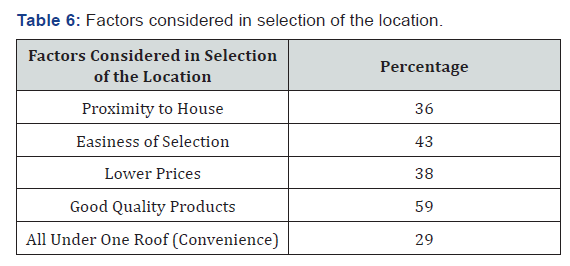
The respondents selected all the factors they consider in
selecting a store to purchase vegetables. Availability of good quality
products was the common determinant among the respondents.
Also, the easiness of selection was considered by 43% which was
followed by the determinant of 38% of respondents, the lower
prices at the selected store. A similar result where the store was
chosen considering the quality of products was revealed in studies
carried out in Kenya by Research Solutions Africa (RSA) Ltd [16]
and in India by Anuradha [1] (Table 6).
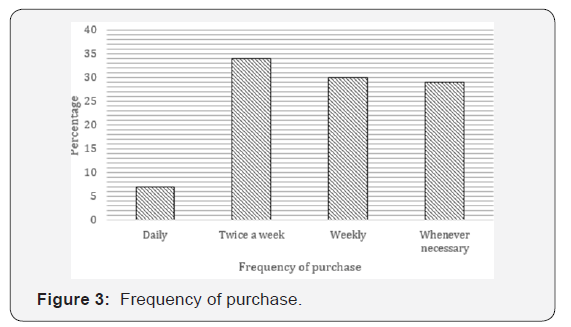
(Figure 3) 34% respondents purchased vegetables twice a
week. Weekly purchasing was also common among them with
a value of 30% followed by the percentage of respondents who
purchased vegetables whenever necessary.
Types of vegetables purchased
The commonly purchased category of vegetables by consumers
out of two categories that are commonly available in Sri Lanka
varied as follows. These two categories of vegetables are based on
the different climatic zones in the country where vegetables are
cultivated (Table 7).
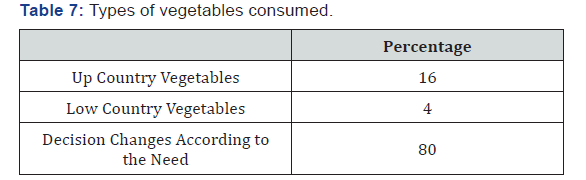
80% of consumers mentioned that the decision of the category
changes according to the need. However, up country vegetables
were purchased by 16% and low country vegetables by 4%
despite the situation.
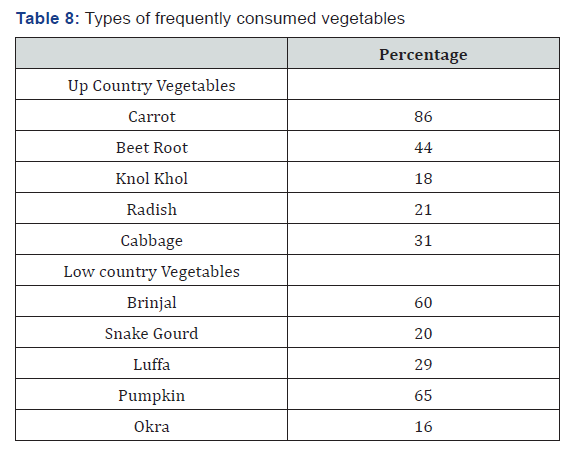
The respondents selected the two frequently consumed
vegetables from each category. Carrot was consumed by 86% which was the commonly consumed up country vegetable and
pumpkin consumed by 65% was the common low country
vegetable (Table 8).
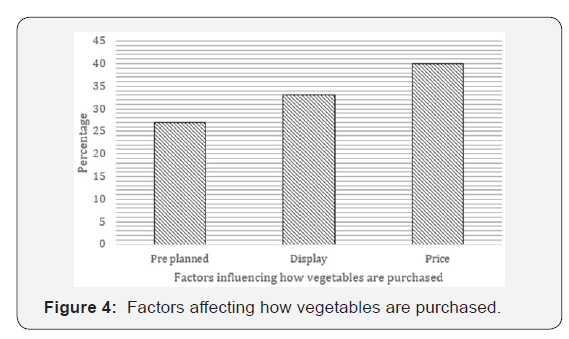
Factors influencing how vegetables are purchased
The price of vegetables was the common factor influencing
how the vegetables are purchased by consumers. This was selected
by 40%. In 33%, the decision was affected by the display in the
store. 27% purchased vegetables as they pre planned (Figure 4).
Considerations during purchasing
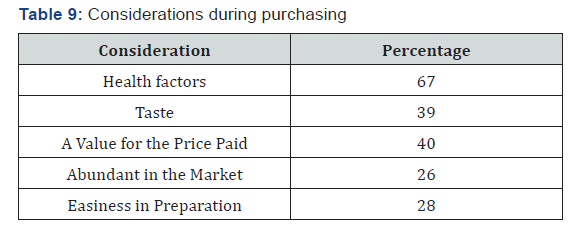
The consumers selected two factors that they consider during
purchasing of vegetables. These factors may determine the type,
quantity or spending during purchasing of vegetables. 67%
included health factors as one of the two important factors. A
value for the price paid was considered by 40% (Table 9).
Behavior in purchasing vegetables
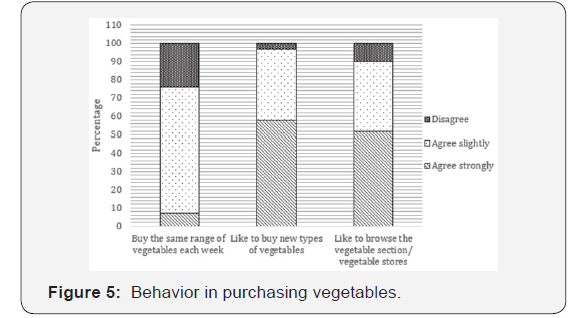
69% slightly agreed with the fact that they purchase the same
range of vegetables each week. However, 58% strongly agreed
that they like to purchase new types of vegetables. This fact was
disagreed by 3%. Likeness to browse the vegetable section or
vegetable stores during purchasing was strongly agreed by 52%
(Figure 5).
Problems faced during purchasing of vegetables
The common problem faced by a majority of 36% consumers
was the poor quality of vegetables. 29% faced the problem of use
of synthetic agrochemicals on vegetables and 28% were affected
by the fluctuation in prices (Figure 6).

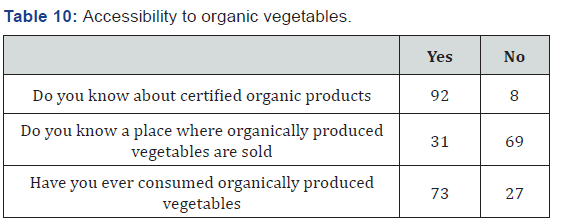
Attitudes and consumer behavior in purchasing organic vegetables
Only 92% of respondents were aware about the organically
certified food. 69% claimed that they do not know a market place
where organically produced vegetables are sold. However, 73%
had consumed organically produced vegetables at least once
(Table 10).
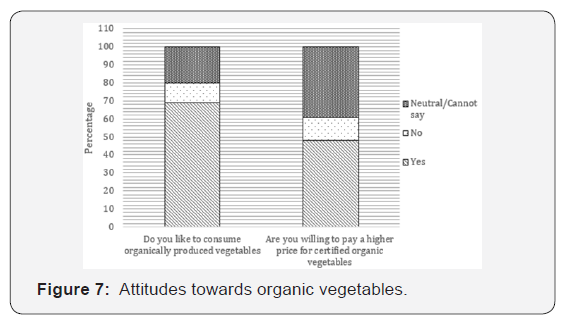
69% of consumers stated that they like to consume organically
produced vegetables while 11% did not like and 20% were neutral
about it. The willingness to pay a higher price for certified organic
vegetables was expressed by a majority of 48%. However, 39%
mentioned that they cannot say about that decision (Figure 7).
Consumer level wastage of vegetables
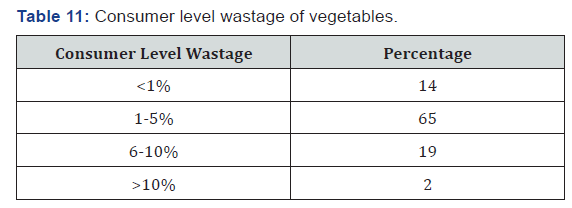
The wastage of vegetables after purchasing at a majority of
households ranged from 1-5%. Only 2% had a wastage of above
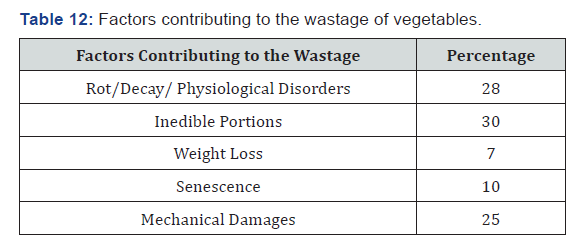
10% (Table 11). The common factor contributing to the wastage
was inedible portions. This was followed by rots, decays and
physiological disorders and mechanical damages (Table 12).

Cultivation of vegetables in home garden
At present, many people tend to cultivate vegetables in their
home gardens to fulfill a portion of their requirements. The
cultivations can be maintained organically, conventionally using
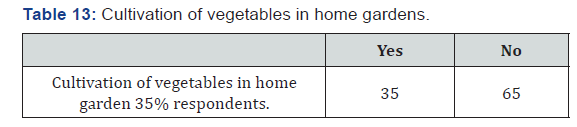
synthetic agrochemicals or as a combination of both 35% of
respondents cultivated vegetables in their home gardens(Table
13). 62.2% of these cultivations were managed organically while
24.3% used both organic and conventional methods (Table 14).
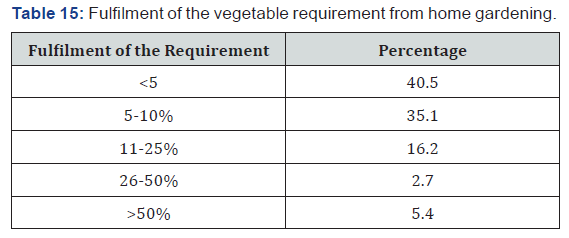
A majority of cultivators were able to fulfill less than 5% of their
vegetable requirement through home gardening. However, home
gardens supported to fulfill more than 50% of the requirement of
5.4% of growers (Table 15).
Conclusion
The consumers behave differently in making decisions during
purchasing of vegetables. These decisions are affected by price,
health factors, the quality of vegetables, home gardening and the
situation. They prefer to purchase organically produced vegetables
and also a variety of vegetables. Purchased vegetables are wasted
by consumers mainly due to inedible parts.
To know more about Journal of Agriculture Research- https://juniperpublishers.com/artoaj/index.php
To know more about open access journal publishers click on Juniper publishers


Comments
Post a Comment