Ethnomedicinal Uses and Inter Specific Diversity Encourage Conservation of Rhynchosia species Growing in Hilly Areas of Swat
Journal of Agriculture Research- Juniper Publishers

Abstract
This work tried to show the medicinal practices of
Rhynchosia, to assess the consensus factor among people of Swat Valley
to measure the potential for novel drugs of herbal origin. There was
immeasurable promise among the informers concerning medicinal uses of
plants with Informants Consensus Factor (ICF) value extending from 0.913
to 0.992 with an average value of 0.952. The study naked that most of
the informants agreed in the application of R. minima to use, to treat
Urinary infection (ICF 0.992) that unveiled the highest fidelity level
(100%). Phylogenetic relationship among the 60 genotypes of Rhynchosia
Species viz., 20 genotypes of R. minima, 20 of R. capitata, 20 of R.
rothii were investigated using morphological and biochemical
description. A total of 26 morphological traits were counted for the
evaluation of phylogenetic relationship through traits similarity index
and cluster analysis. Eight reproducible bands were detected in all of
three species with molecular weight ranging from 10KDa to 180KDa. Intra
locus contribution toward the genetic disagreement was 62.5% in R.
minima, 25% in R. capitata, 37.5% in R. rothii. In the similar way,
inter species locus contribution toward genetic diversity was 75%. Out
of eight loci L-3, L-6, L-7 were monomorphic in R. minima while L-3 L-4,
5, 6, 7 and 8 were monomorphic in R. capitata. L-3, 4, 6 were
monomorphic in R. rothii. Interestingly, Locus 3 (L-3) and locus 6 (L-6)
were monomorphic in collected germplasms and marked as generic specific
loci for Rhynchosia species. .
Keywords: Rhynchosia species; Medicinal uses morphology; SDS-PAGE; Phylogenetic relationship; Cluster analysis
Abbreviations:
ICF: Informants Consensus Factor; PRA: Participatory Rural Appraisal;
LC: Leaf Color; St: Seed Texture; Hc: Hilum Color; SC: Seed Coat Color;
SS: Seed Shape; PL: Petiole Length; LL: Leaf Length; LW: Leaf Width; SL:
Seed Length; SW: Seed Width; ST: Seed Thickness; SW: Seed Weight; PodL:
Pod Length; SP: Seed Per Pod; PP: Pod Per Plant; IL: Inflorescence
Length; IW: Inflorescence Width; BPB: Bromo-Phenol Blue
Introduction
The genus Rhynchosia belongs to family Fabaceae. This
genus is widely dispersed in the hilly areas of the tropics and sub
tropics, spreading into temperate regions with roundabout 200 species
throughout the world [1]; it is characterized by 7 species in Pakistan
Jahan et al. [2]. It is commonly recognized as snout bean. This genus is
classified in the Tribe Phaseoleae and Subtribe Cajaninae, a group
closely related to beans, pigeon peas and grams (Phaseolus, Cajanus and
Vigna spp.). According to the flora of Pakistan this genus is Climbing,
prostrate or sometimes erects herbs or subshrubs. The leaves of most of
the species are pinnately trifoliolate with axillary or terminal
Inflorescence. Its fruits maybe oblong, compressed, 1-2-seeded.
Several examinations has exposed that the decoction
of the roots of Rhynchosia capitata DC have stomach cleaning action.
Various species of Rhychosia like R. minima roots [3] and R. nul
bilis seeds Joo Hyuk Yim [4] have been described to be used in
Ingestion. Several activities like antibacterial, antifungal and
antioxidant have been reported in R. minima Gundidza [5]. The
anti-inflammatory effect against cotton pellet induced sub-acute
inflammation in rats have been reported in the methanolic extracts of
flowers of R. cana Vimala [6]. In addition, studies have shown the
occurrence of C-glycosides, o-glycosides, prenylated flavonoids and
aglycones in these species of the plant [5].
It is commonly recognized that morphological
description has a key role in the study of genetic diversity in choosing
elite variety of medicinal plants but affected by ecological changes
harshly and conflicting the analysis of genetic discrepancy Nisar et al.
[7]. On the other side genetic diversity evaluation through molecular
practices such as biochemical assessment at protein level and DNA based
techniques have a number of advantages over the traAbstractditional
morphology Ndiaye et al. [8] but matched to biochemical
assessment at protein level, molecular investigation of DNA markers
is too expensive [9]. Among biochemical techniques, SDS-PAGE
process is a simple, reliable, cheap and free of environmental fluxes
[10]. SDS-PAGE is now widely used as biochemical procedure
to describe the genetic structure of plant species [11]. Massive
consideration has been focused on the use of SDS-PAGE over the
last two decades for approximation of genetic diversity, reliable
judgment and identification of plant varieties. Seed storage protein
markers have been effectively used to resolve taxonomic relationships
and characterize cultivated varieties in a number of crop
plant species [12]; [7] V. unguiculata [9]. Proteins are being the
end products of gene expression; SDS-PAGE can be employed to
identify varities, determine polygenetic relationship in different
species, biosystematics analysis and evaluate the passport data
[13].
Pakistan is the midpoint of diversity of Rhynchosia but yet,
there is no scientific report available in the literature on the medicinal
uses and their conservation using phylogenetic relationship
of Rhynchosia species (R. capitata, R. minima, and R. rothii).
The objective of the study is to estimate ethnomedicinal uses and
phylogenetic relationship in Pakistani Rhynchosia species on the
basis of morphological and SDS-PAGE investigation.
Materials and Methods
Exploration and collection
Various investigative trips were planed to 24 various areas
(Ziarat, Rangila, Swegalai, Kohay, Jawand, Amlook Tangay, Kandao,
Gharai, Khazana, Gamkot, Saboonkhfa, Nawagai, Barikot, Kandak,
Behakan, Khawzakhela, Sangota, Kanju, Derai, Aligrama, Melaga,
Dagay and Gadi) of District Swat, Khyber Pakhtunkhwa during
years, i.e., 2017-2018. 60 genotypes of three species were recognized
and inspected for morphological description and protein
profiling.
The study zone was visited four times in different seasons of
the year of 2017. Voucher specimens for each species have been
gather and treated using standard herbarium procedures [14]. The
specimens were recognized referring different Floras, viz., Hooker
(1872-1897). Ethnomedicinal data has been collected through
Participatory Rural Appraisal (PRA), which is based on communication
with indigenous people and direct observation in the field
Martin [15]. The data have been noted through semi-structured
interviews with people involved in the plants, organization [14]. A
total of 130 residents have been interviewed. During the field survey,
information on uses of plants to cure various diseases of human
being, parts used, of medicine have been collected. Based on
the information obtained from the informants in the study area, all
the reported diseases have been classified into 12 groups.
The level of similarity among information delivered by various
informants was calculated by the Informants’ Consensus Factor,
ICF Trotter and Logan [16] by applying the following formula:

Where, Nur = number of use reports from informants for a
specific plant-use category; Nt = number of taxa or species that
are used for that plant use category for all informants.

ICF Values range between 0 and 1, where ‘1’ indicates the
highest level of informant agreement. The fidelity level (FL), the
percentage of informants claiming the use of a certain plant species
for the same major purpose, was calculated for the most frequently
reported diseases or ailments as:
Where, Np = number of informants that claim a use of a plant
species to treat a particular disease; N = number of informants
that use the plants as a medicine to treat any given disease [14].
Morphological description
Phenotypic description was performed for evaluation of phylogenetic
relationship; 26 morphological traits were documented.
Out of 26 characters 9 were qualitative and 17 quantitative. Qualitative
characters comprise of leaf color (LC), seed texture (St),
Hilum color (Hc), seed coat color (SC), seed shape (SS), leaf pubescent,
leaf stipule presence, flower color Whereas, quantitative
traits scored were petiole length (PL), leaf length (LL), leaf width
(LW), seed length (SL), seed width (SW), seed thickness (ST), and
seed weight (SWt), pod length (PodL), No. of seed per pod (SP),
No. of pod per plant (PP), inflorescence length (IL), inflorescence
width (IW), 100 seed weight, No. of branches per plant, plant
height (Ph), stipule length (StL), Biomass. Characters mean was
found out after measuring of 3 different samples (small, medium,
large) of each quantitative trait. Seven morphological characters
were documented, and cluster analysis was performed using software
PC-ORD and SPSS.
SDS-PAGE description
For SDS-PAGE examination single seed of each genotype was
crushed into a fine powder with the help of mortar and pestle for
the extraction of proteins. About 400μl of protein extraction buffer
(0.5 M Tris-HCL pH 8.0, 0.2% SDS, 5 M Urea, 1% B-mercaptoethanol)
was added to 0.01g of seed flour taken in 1.5ml Effendorf tube.
The E-tube was vortexed thoroughly to homogenize the mixture.
Bromo-Phenol Blue (BPB) was added to the protein extraction
buffer as tracking dye to monitor the movement of protein in the
gel. The homogenated samples were centrifuged at 13,000rpm for
13 minutes at 10 ˚C. The electrophoretic procedure was carried
out using 12% polyacrylamide gel, separation gel (3.0M Tris-HCl
pH9.0, 0.4% SDS) and 4.5% stacking gel (0.4M Tris-HCl pH 7.0,
0.4% SDS). Electrode buffer (0.025 M Tris, 129 M Glycine, 0.125%
SDS) was poured into the top pool of the apparatus. A total volume
of 8μl of the protein extract solution was loaded in each well
of the gel with the help of micropipette. The electrophoresis was
run at 100V until the blue line passed through the bottom of gel
plates. The gels were then stained in staining solution containing
0.2% BPB dissolved in 10% glacial acetic acid, 40% methanol and
water in the ratio of 10:40:50. Gels were de-stained in a solution
containing 5% acetic acid and 20% methanol for 15 minutes. The data were recorded from the destined gel on the basis of presence
and absences of protein bands, i.e., ‘1’ for the presence and ‘0’ for
the absence of bands and cluster analysis was carried out using
software PC-ORD and SPSS.
Results
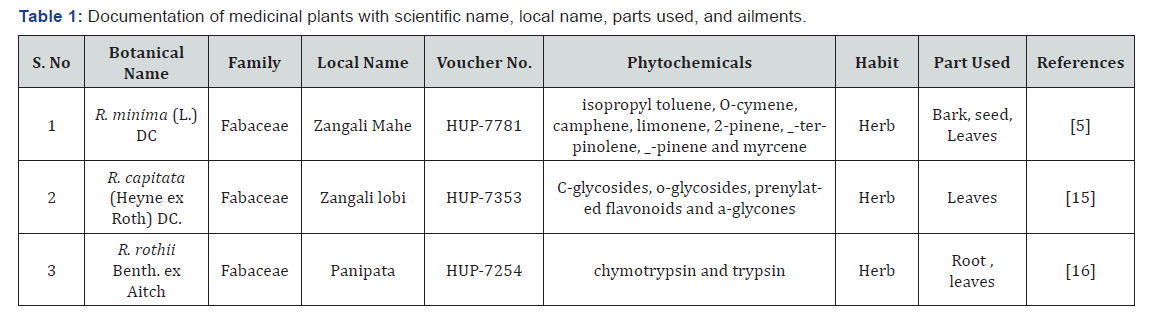
In this study 3 plant species of Rhynchosis (R. minima, R. capitata
and R. rothii) of Fabaceae family in Swat district, have been
in listed for curing of 12 categories of diseases. For each species
botanical name, family, local name, illnesses to be treated, and
part(s) used were recorded (Table 1). Consumption of plant parts
as medicine among the informants shows disparities. Seeds are
mostly used part for majority, followed by roots, leaves and bark
(Table 1). In the current investigation area threat to the species
is marginal as seeds are the leading plant part used for medicinal
purposes. It was supposed that the collection of part of plant as
medicinal part from the wild were not manageable. According to
residents, this type of activity is done by the collectors related to
illegal activity of medicinal plants. Rhynchosia is vulnerable to this
type of activity in the study region [5,17,18].
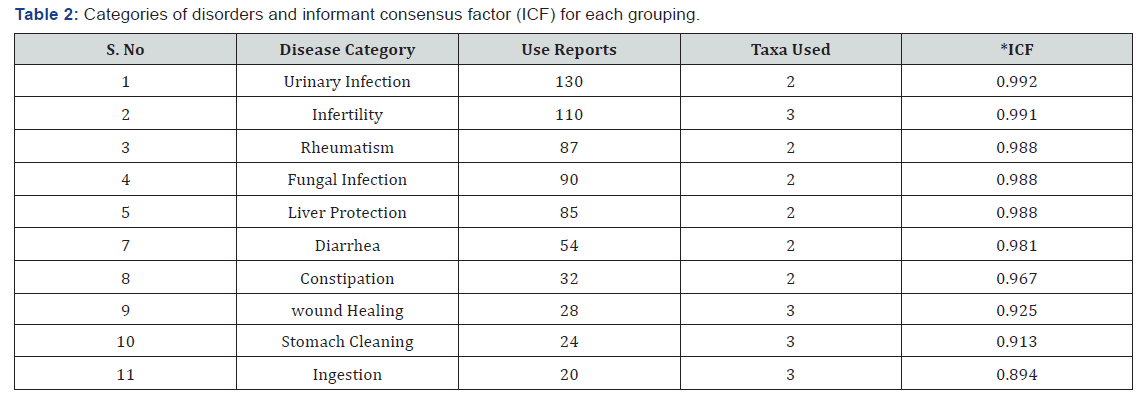
ICF values were established to know the settlement among
the informants of Swat valley for usage of plants to cure certain
illness groups. ICF values are designated in the Table 2. It is known
that the ICF values vary from 0.992 to 0.913 with an average value
of 0.952. Urinary infection has the highest ICF value 0.992 with
130 use-reports for 2 plant species. The specie liable for this high
consensus was R. minima with 130 of the defined events, linked
by Infertility (ICF = 0.991; 110 use-reports, 3 species), Rheumatism
(ICF = 0.988; 87 use-reports, 2 species), Fungal infection
(ICF= 0.988, 90 use reports, 2 species) and so on. Medicinal plants
thought to be effective in treating specific illness have high ICF
values. The high ICF value for Urinary infection possibly unveiled
that this ailment is common in the study area High ICF values also
designate that the specie predictably used to treat these illnesses
are worth searching for bioactive compounds. The least agreement
(ICF=0.894) between the informers was detected for plants
used to cure Ingestion problems. The low ICF value as noted in our
study could be due to a lack of communication among people in
various areas (Table 2).
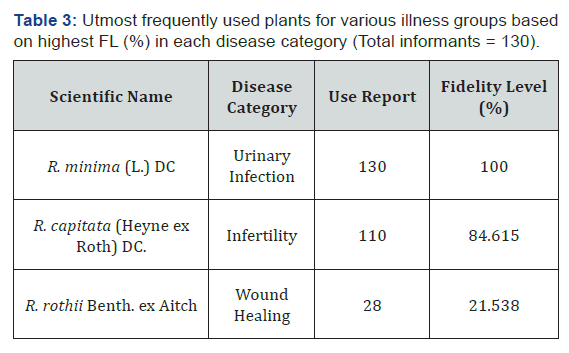
To discover conventionally significant medicinal species in
the society, Fidelity Level (FL) of plants has been predicted based
on use reports which have been cited by 50 or more informants
for being used against a given disorder. The FL values are shown in
Table 3. The examination demonstrated that the highest FL value
found in R. minima followed by R. capitata and R. rothii respectively.
The least FL value was found in the case of R. rothii. FIC and
FL studies presented that the most commonly used species in the
study area is R. minima (ICF = 0.991) with 130 use-reports and
FL value (100%). When choosing the most ideal plant species for
each ailment category, we took the high-fidelity Level (%) in each
category of ailment.
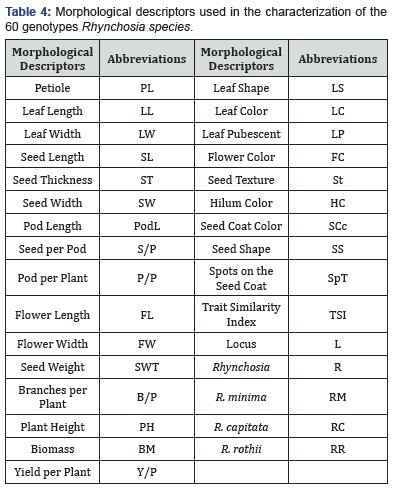
Morphological description
For morphological data analysis both the qualitative and
quantitative traits were taken. Quantitative traits which were
measured with the help of Vernier calipers are: petiole length
(PL), leaf length (LL), leaf width (LW), seed length (SL), seed width
(SW), seed thickness (ST), and seed weight (SWt), pod length
(PodL), No. of seed per pod (SP), No. of pod per plant (PP), inflorescence
length (IL), inflorescence width (IW), 100 seed weight,
No. of branches per plant, plant height (Ph), stipule length (StL),
Biomass. Characters mean was found out after measuring of 3 different
samples (small, medium, large) of each quantitative trait.
(Table 4).
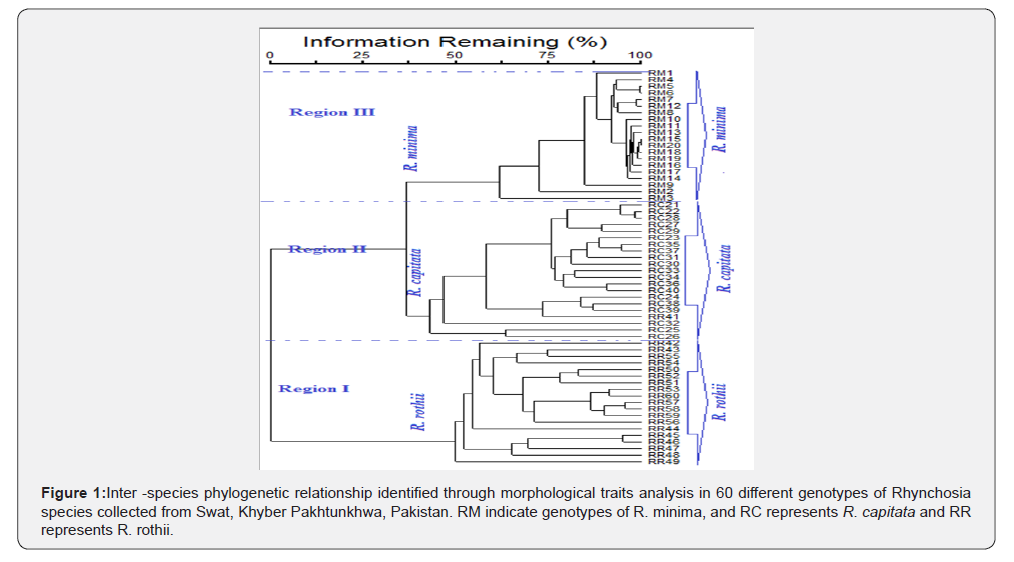
Qualitative characters are leaf type (LTY), leaf color (LC), seed
texture (St), Hilum color (Hc), seed coat color (SC), seed shape
(SS), leaf pubescent, leaf stipule presence, flower color. The quantitative
and qualitative characters of 60 genotypes (total 26 characters)
were documented and data was subjected to computer
software the PCORD shown in (Figure 1). The result of the cluster
analysis was shown as a phylogenetic tree (Dendrogram) based on
the linkage distance (Figure 1).
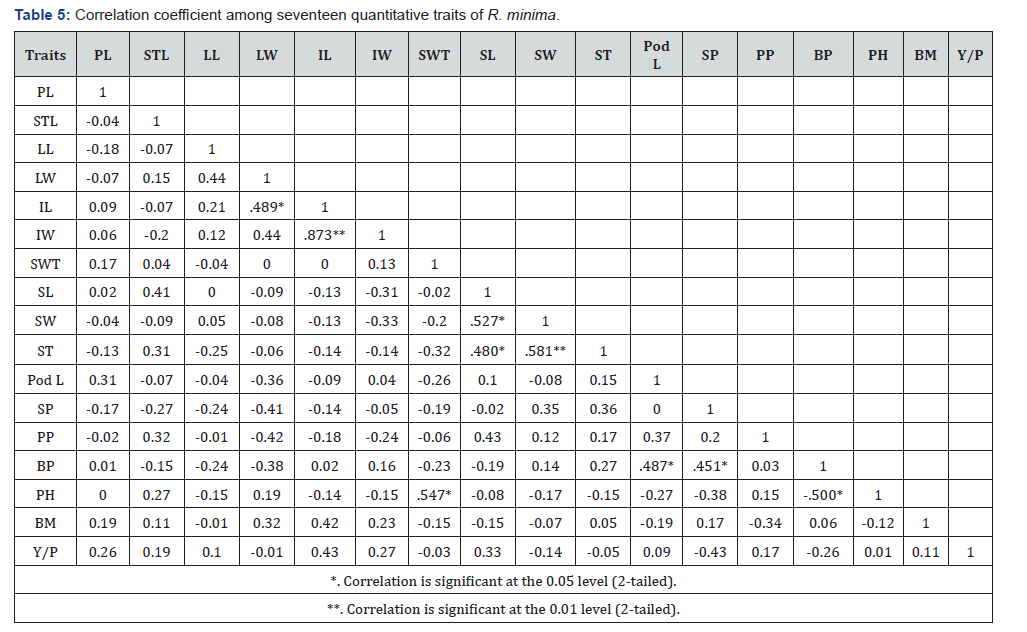
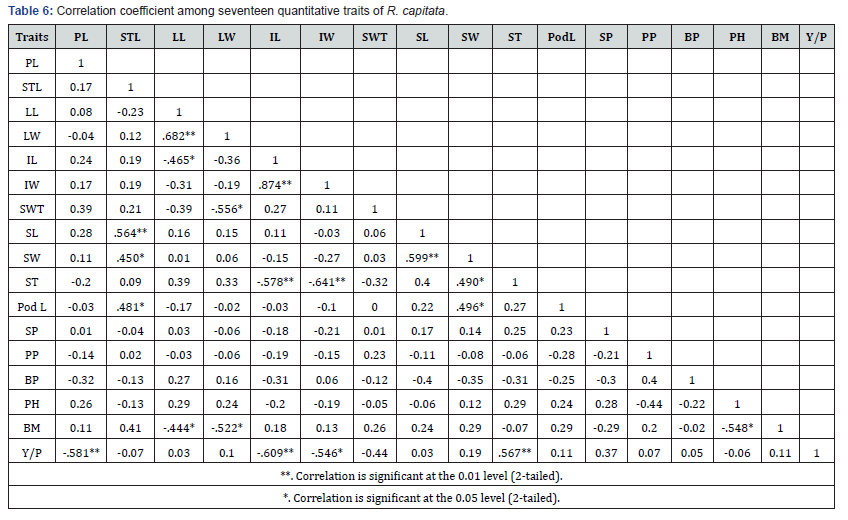
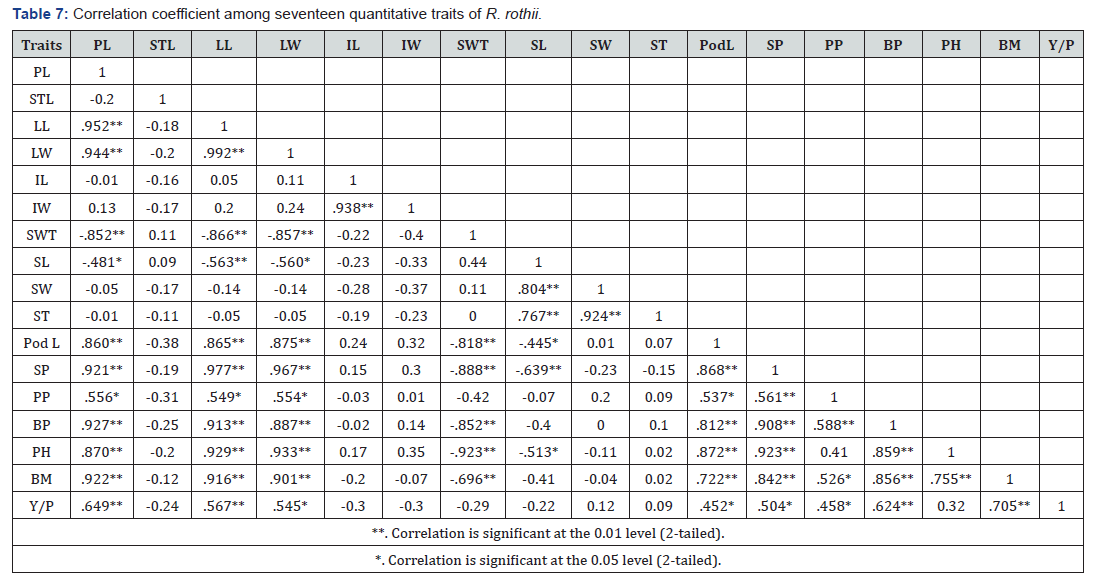
In correlation study of 3 species of Rhynchosia (R. minima,
R. capitata, and R. rothii) (Table 5-7) the petiole length in the R.
minima and R. rothii is negatively correlated with stipule length
positively correlated with stipule length in R. capitata. Stipule
length is negatively correlated with leaf length in R. minima and
R. capitata. Whereas positively correlated with the leaf length in R.
rothii. The leaf width is significantly positively correlated with the
inflorescence length in R. rothii, R. minima and R. capitata. Seed
length seed width, seed thickness, No. of the Pods/Plant, No. of
seed/Plant, stipule length and 100 seed weight are negatively correlated
with petiole length, leaf length, leaf width, inflorescence
length, inflorescence width, pod length and stipule length in all of
the three species.
The data of 60 genotypes based on morphology was considered
for the construction of phylogenetic tree to represents the
similarity of the three species of the Rhynchosia and were analyzed
for resemblances and the phylogenetic tree was made (Figure
1). The phylogenetic tree separated three species into three
regions, the region I was composed of 20 genotypes of R. rothii
(RR41-RR60) whereas the Region II consisted of 20 genotypes of
R. capitata (RC21-RC40) at a linkage distance 37.5. While region I
included 20 genotypes of R. minima (1-20).
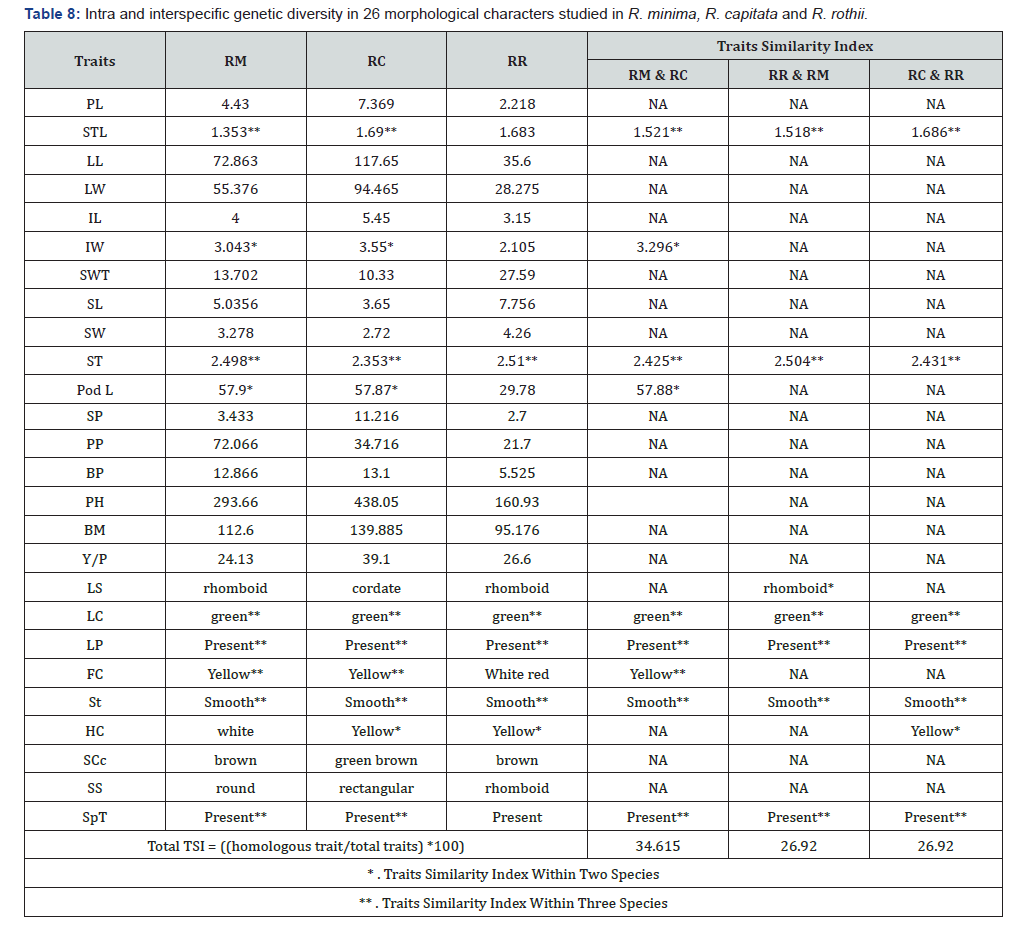
The similarity indexes were performed for all the genotype of
all three species that was 34.615 for R. minima and R. capitata.
Whereas R. rothii and R. minima were 26.92% similar morphologically.
While R. capitata and R. rothii revealed 26.92% similarity
(Table 8).
SDS- PAGE analysis
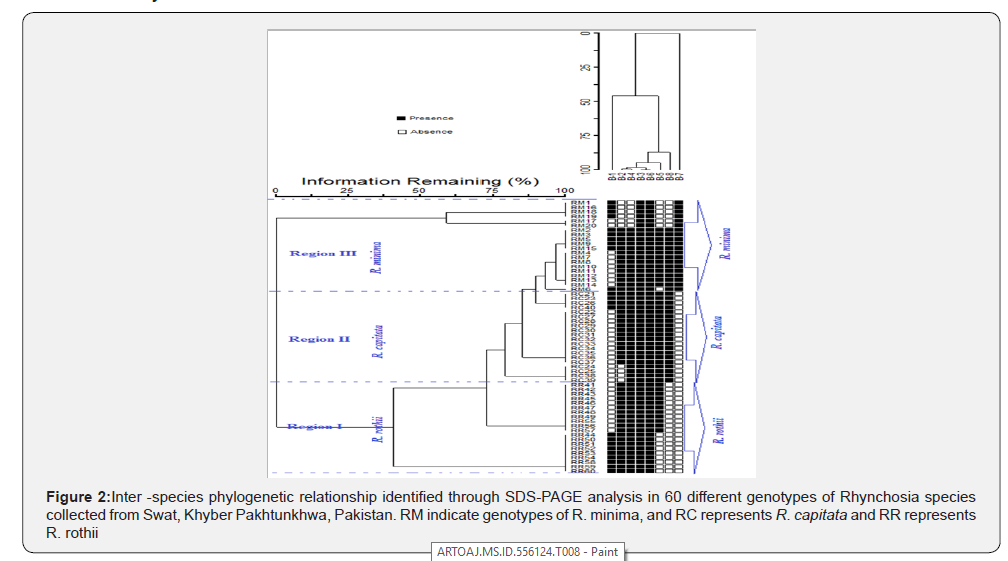
Eight bands were noticed in three species of Rhynchosia (R.
minima, R. capitata and R. rothii) Figure 3. The phylogenetic relationship
among all the three species through phylogenetic tree has
been shown in the (Figure 2). The phylogenetic tree divided all the
sample of three species into three regions. The Region I included
20 genotypes of R. rothii RR41-RR60); these were collected from (RR41 Ziarat, RR42 Rangila, RR43 Swegalai, RR44 Kohay, RR45
Jawand, RR46 Amlook Tangay, RR47 Kandao, RR48 Gharai, RR49
Khazana, RR50 Gamkot, RR51 Saboonkhfa, RR52 Nawagai, RR53
Barikot, RR54 Kandak, RR55 Behakan, RR56 Khawzakhela, RR57
Sangota, RR58 Kanju, 59 Derai, RR60 Aligrama while the Region
II consisted of 20 genotypes of R. capitata ; RC21 Melaga, RC22
Dagay , RC23 Gadi, RC24 Jawand, RC25 Amlook Tangay, RC26 Kandao,
RC27 Gharai, RC28 Khazana, RC29 Gamkot, RC30 Saboonkhfa,
RC31 Nawagai, RC32 Barikot, RC33 Kandak, RC34 Behakan, RC35
Khawzakhela, RC36 Sangota, RC37 Kanju, RC 38 Derai, RC39 Aligrama,
RC40 Swegalai. Whereas the Region III was composed of
the 20 genotypes R. minima these were collected from; RM1 Gharai,
RM2 Khazana, RM3 Gamkot, RM4 Saboonkhfa, RM5 Nawagai,
RM6 Barikot, RM7 Kandak, RM8 Behakan, RM9 Khawzakhela,
RM10 Sangota, RM11 Kanju, RM12 Derai, RM13 Aligrama, RM14
Melaga, RM15 Dagay, RM16 Ziarat, RM17 Rangila, RM18 Swegalai,
RM19 Kohay and RM20 Jawand. Moreover, dendrogram based on
SDS-PAGE showed that the genotypes of R. rothii were 37.5% similar
with the genotypes of R. capitata whereas the genotypes of
R. minima have 87.5 similarities with the genotypes of R. capitata
(Figure 2).
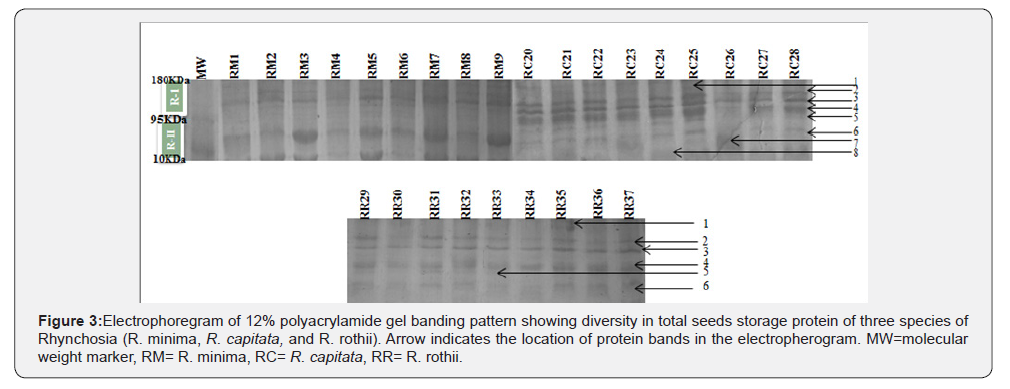
Decisively, the Region I grouped 20 genotypes of R. rothii. The
Region II comprised of 20 genotypes R. capitata. Whereas the Region
III consisted of 20 genotypes R. minima revealed a clear-cut
evidence for species identification on the basis of seed storage
protein.
Locus dissimilarity
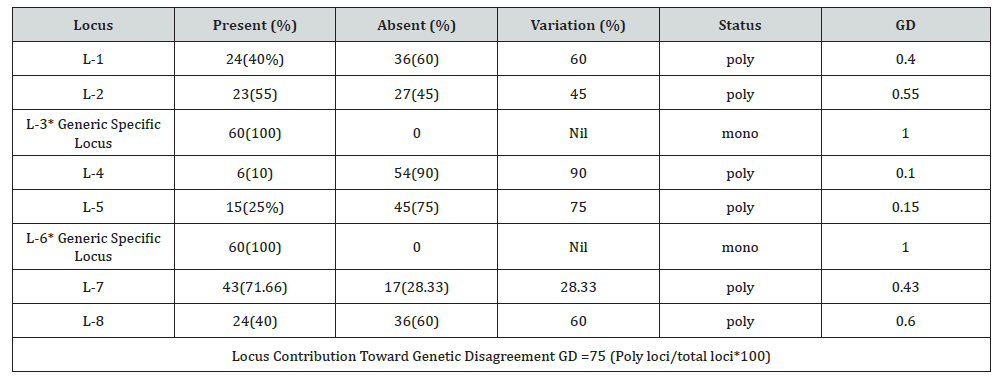
Strangely, table 9 displays interspecific variation among 60
genotypes of the Rhynchosia species. Among all the genotypes,
eight loci (L1-L8) were noted, out of these L3 and L6 were monomorphic
and were marked as generic specific which is used to
distinguish the Rhynchosia species. Moreover, the loci L-1, L-2,
L-4, L-6 and L-8 were marked as polymorphic with 60, 45, 90, 75,
28.33 and 60 percent genetic diversity, respectively. The inter species
comparative locus contribution toward genetic disagreement
was 75% in the three species of 60 Rhynchosia genotypes (Table
9).
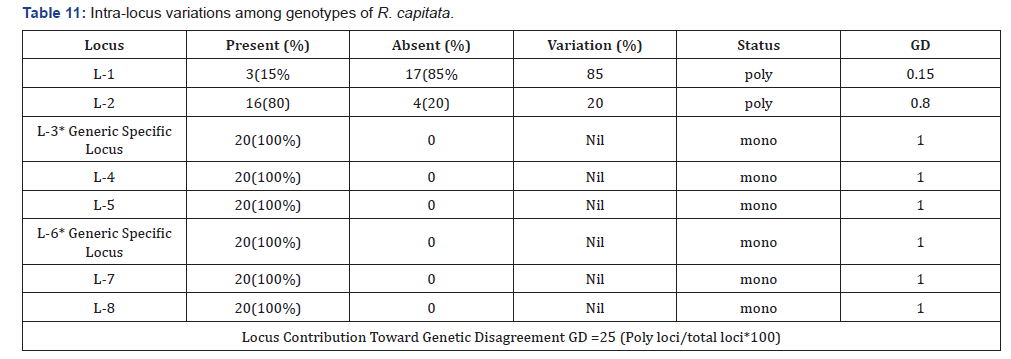
The Table 11 represents the intraspecific variation among the
20 genotypes of R. capitata. Among eight loci, out of which L-3,
L-4, L-5, L-6 L-7 and L-8 were monomorphic, while L-1 and L-2
were polymorphic. L-2 and L-3 represent 85 and 20 percent variation.
The locus contribution toward genetic disagreement of R.
capitata was 25% Table 11.
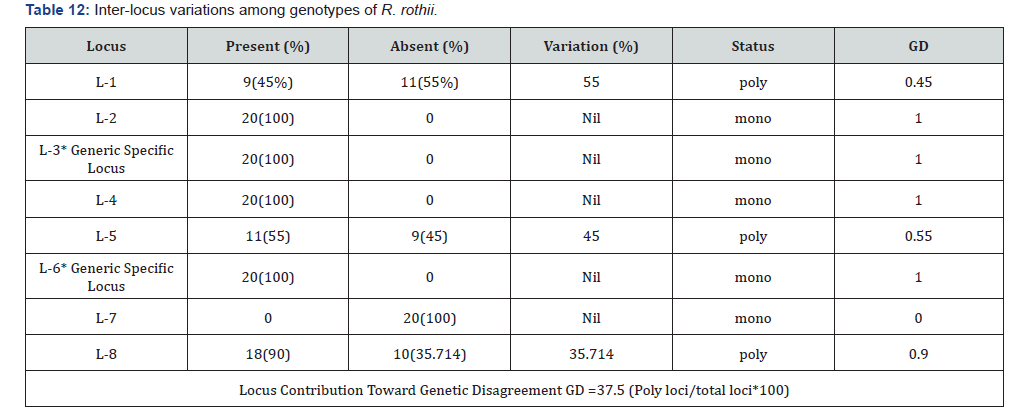
The Table 12 represents the intraspecific variation among the
20 genotypes of R. rothii. Among eight loci, out of which L-2, L-3,
L-5 and L-6 L-7 were monomorphic, while L-1 and L-8 were polymorphic.
The L-7 was missing in 20 R. rothii genotypes. Hence this
missing band in this specie can be helpful to identify this specie.
L-1 and L-8 represent 55 and 35.714 percent variation respectively.
The locus contribution toward genetic disagreement of R. rothii
was 37.5 % table 12.
Discussion
Most of the public’s living in the region depends on direct
medicinal plant to treat a wide range of illnesses. However, the
vanishing of these plant species is steadily reported chiefly due
to fluctuations in the environment, land degradation and unsustainable
use of these plants; moreover, the expansion of invasive
species has donated a lot to their disappearance Mohammed et al.
[19]. Conservation of medicinal plant genetic diversity has freshly
created a lot of attention in the tropics as a result of many years
of misconduct, adverse environment as well as socio-economic
changes. Population genetic theory expects that the reduction
in the genetic diversity limits a species ability to keep pace with
the changing selection pressure Young and Merriam [20]. Plant
species mainly the medicinal plants rely on the existing genetic
diversity for constancy and survival under the ever-fluctuating environments
[21]. Understanding medicinal plants species population
genetic structure is vital for their conservation, planning and
justifiable organization Sun et al. [22]. Therefore, a common goal
line of conservation is to preserve genetic diversity in “red listed”
species, which is crucial for long-term survival and evolutionary
response to the altering environment [23]. One main implication
of this method, from the viewpoint of conservation genetics, is
that it could help us set sampling intervals of areas within populations
to optimize the genetic diversity in collections from local
populations of rare, endangered, or endemic plant species Chung
et al. [24]. For the purpose of conservation of plant species, most
of the investigations deal only with determination of genetic diversity
in individual populations [12].
This work has been consequently initiated with an objective
to file the knowledge and practices on the Rhynchosia medicinal
practices by the local residents and its genetic diversity. The present
research is supposed to add up the publics’ knowledge in the
country’s database of traditional knowledge and will offer a baseline
data for future pharmacological and phytochemical investigation.
Genetic diversity suits more vital in view of climatic change
and allied unexpected events as it may serve as the source of novel
traits considering tolerance to different biotic and abiotic stresses
Muhammad et al. [12].
Though, the indigenous knowledge that has been recognized
was previously eroded, if not in all, previously in most of the parts
studied Mohammed et al. [19]. Contributions concerning conservation
of traditional knowledge still remain scarce [25]. Therefore,
the study focused on recognizing local factors that promote the
knowledge on introduced and native medicinal plant species, and
to designate medicinal uses of plant species.
This work is one of the first efforts to count the ethnomedicinal
information and interspecies genetic diversity in Rhynchosia species
(R. minima, R. capitata and R. rothii from Swat which offer better
choice for the selection of broadly used medicinal plants looking
for bioactive compounds to cure illnesses. The study described
3 medicinal plants with their uses from the Swat. The effectiveness
and safety of all the reported ethnomedicinal plants need to
be assessed by phytochemical and pharmacological studies. Plants
with high informant consensus factor use report and fidelity level
should be given priority to carry out bioassay and toxicity studies.
From this study we suggest R. minima for further ethno-pharmacological
studies, since this species has the high ICF and FL values.
The results presented that this species may be used for the development
of new, cheap, effective, and eco-friendly herbal formulations
for healthcare organization. Additional use of these herbal
formulations for healthcare management will need safety and effectiveness
testing. According to occupants and our observations
in the field, R. minima are now a very infrequent plant in the area.
Illegal and unsustainable collection of leaves and seeds from this
plant by the local crude drug traders is one of the major causes
of depletion of this species from nature. There is crucial want to
formulate suitable conservation strategies for naturally growing
ethnomedicinal plants to overcome their depletion from natural
resources and to make these practices more ecofriendly.
The examination of genetic diversity and phylogenetic relationship
in medicinal plant species is helpful in their conservation.
Molecular markers are the most effective markers for genetic
polymorphism studies in many species [26]. However, the use
of biochemical markers based on total seed protein and enzyme
by SDSPAGE method has confirmed to be a consistent, yet inexpensive
technique of developing countries. Genetic markers for
identification and genetic analyses of several plant species, as they
reveal differences between storage proteins or enzymes encoded
by different alleles at a single (allozymes) or more gene loci (isozymes)
Oppong-Konadu et al. [27].
The SDS-PAGE of seed storage protein is a technique
to examine
genetic variation and to categorize plant varieties [28]. The
arrangement between various subgenera, species and subspecies
are based primarily on morphological attributes. However, these
morphological traits may be unstable and influenced by environmental
instabilities [29]. Plant identification is often masked by
high species dissimilarity. Re-evaluation of the morphological
variation within taxa and populations is therefore essential [30].
Among several biochemical techniques, SDS-PAGE (Sodium Dodecyl
Sulphate) has been used successfully to resolve taxonomic
and evolutionary problems of several plants [31]; Lioi et al. [32].
In this technique protein is separated according to their molecular
weights. Resolution of this technique is very high and therefore it
could be used as a reliable tool for taxonomic purposes Bartke et
al. [33]. Its banding pattern is very stable which encouraged for
identification purpose in medicinal plants. It has been broadly
recommended
that such banding patterns could be used as important
supplemental method for medicinal plant documentation Tanksley
et al. [34]; Thanh et al. [35]. Analyses of SDS-PAGE are simple
and inexpensive, which are added advantages for its use in practical
plant breeding practices [36].
SDS- PAGE has been considered as useful tool for the estimation
of genetic and systematic relationships in flowering plants at
generic and specific levels Crawford [37] because the seed storage
protein electrophoretic pattern shows genetic affinities within
taxon and even between different biological taxa [38]. Hence, in
this work three different species of Rhynchosia were selected and
their relationship was investigated using SDS-PAGE.
The three plants species under the genus Rhynchosia study
exposed that no two plants have similar protein banding patterns
which shows, the presence of genetic diversity among these species.
The occurrence of common bands/loci (L-3 and L-6) among
these three Rhynchosia species suggests their close genetic similarity
and common ancestry. These loci coded for by a gene that
has become fixed in different species under genus Rhynchosia over
evolutionary time that is an agreement with finding of Nisar et al.
[7] that the appearance of common bands in Lycopersicum and
Trichosanthes species labels their common evolutionary origin.
Also, Alkinwusi and Illoh [39] accredited the appearance of a common
band in all individual in a population to the fact that the gene
coding for the enzyme or protein does not differ.
Due to High inter-species locus contribution toward genetic
disagreement SDS-PAGE could be a reliable technique for identification
of these three species, while intra-specie locus contribution
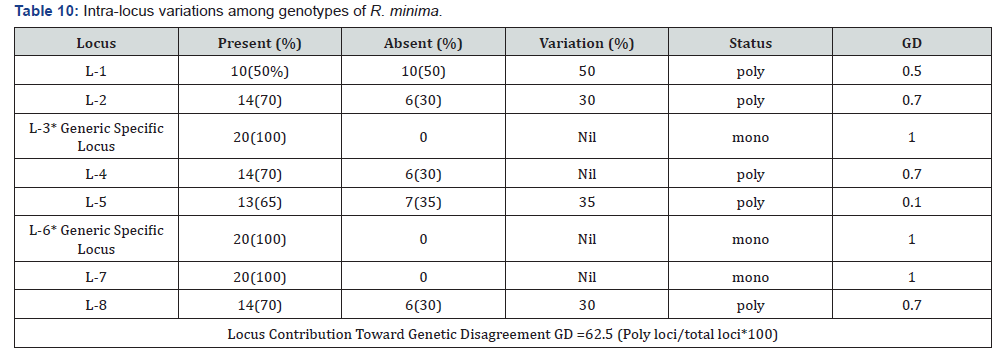
toward genetic disagreement was high in genotypes of R. minima
(62.5%) as compare to R. rothii (37.5%) and R. capitata (25%) respectively.
In our present study, phylogenetic tree based on seed storage
protein analyses of selected species of Rhynchosia showed that the
three species of Rhynchosia had close similarity to one another.
The result showed that the R. rothii was clustered adjacent to R.
capitata showed 37.5% genetic similarity. Whereas the genotypes
of R. minima have 87.5 similarities with the genotypes of R. capitata.
The results obtained after SDS-PAGE electrophoresis disclosed
that the method provided a powerful tool for reliable germplasm
discrimination based on genetic differences in seed storage protein.
Thus, the present study explores the existing polymorphism
of total proteins through SDS PAGE to facilitate description of selected
germplasm of Rhynchosia.
Conclusion
The current work delivers indication that medicinal plants
have an important role in the healthcare system of Swat urban
public. They still endure to depend on medicinal plants for the
treatment of healthcare problems. The existing paper denotes
significant ethno-botanical information on medical plants which
provides baseline data for future pharmacological studies and
genetic diversity is helpful in selection elite genotypes for future
conservation.
To know more about Journal of Agriculture Research- https://juniperpublishers.com/artoaj/index.php
To know more about open access journal publishers click on Juniper publishers


Comments
Post a Comment