Vision of The Integrated Management of The Tomato Plant in Soil in Greenhouse for Medium and Low Technology Growers- Juniper Publishers
Journal of Agriculture Research- Juniper Publishers

The tomato Lycopersicum esculentum is one of the most studied, cultivated and consumed vegetables in the world. Studied from a physiological aspect of the plant system: roots, stem, leaves, flowers and fruits. Under different growing conditions are established: soil and hydroponics, and type of substrate. Its management in intensive cultivation systems in horticulture must include: mineral fertilizers, nutrient solution in fertigation, use of biostimulants, and nutritional diagnosis.
Plants absorb water and nutrients from the roots, where they are in turn anchored to the soil, or some other means of support related to the root system. Once the variety of interest has been selected. The initial stage includes the germination of the seeds. The seedling length and stem diameter indicate good seedling vigor, in addition, this helps minimize stress during transplantation, especially in soil. Temperature monitoring favors quality seedlings.
The monitoring of irrigation drainage prevents the appearance of diseases in the root neck, although it can also be associated with factors such as relative humidity and temperature. The root distribution mechanism will depend on the same structure. During this process, protection of roots against pathogens will be necessary.
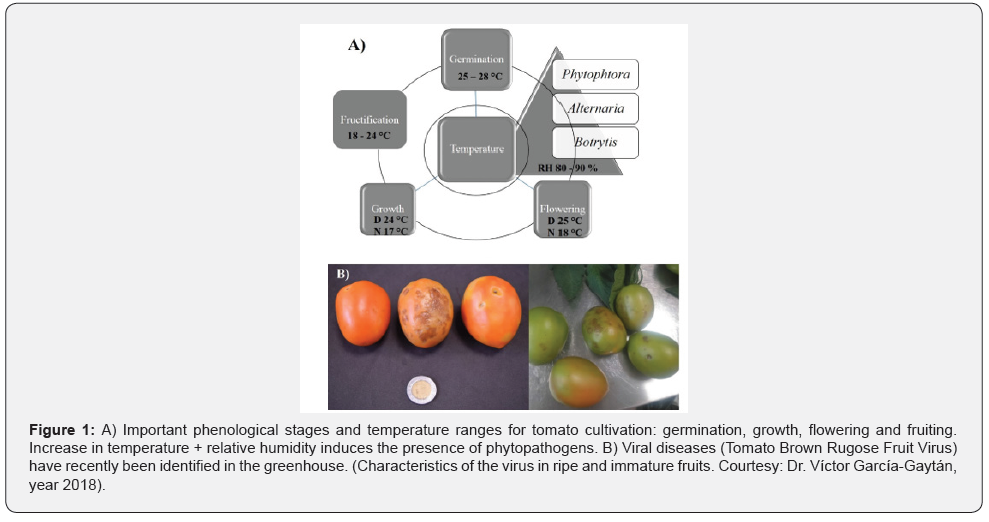
Root density below the mulch is a good indicator of the correct application of water and nutrients in the irrigation lines, programmed from the irrigation head [1]. A low relative humidity RH (40%) can cause physiological and nutritional problems [2]. In tomato cultivation, it implies knowing the number of plants per m2, specific qualities of the variety, fertigation system, pest and disease control, and harvest. Physiological and nutritional understandings, and their relationship with climatic conditions (Figure 1A & 1B).
Before transplanting, a good physical-chemical analysis of the soil and water must be carried out. The leaves should be used for nutritional diagnosis, to confirm symptoms of deficiency or optimal nutritional ranges [3].
To know more about open access journal publishers click on Juniper publishers


Comments
Post a Comment